System 1 → System 2
Bridging classical and frontier robotics.
S1S2 bridges the classical robotics that drives machines today and the frontier models that will plan for them.
Why S1S2
System 1 drives the robot. System 2 plans.
Classical robotics is fast, predictable and verifiable. Foundation models bringsemantic understanding and long-horizon planning. We build the bridge between the two — so robots gain the second without giving up the first.
How the two systems work together →Sense · Think · Act
The classic loop, extended for foundation models
Every robot senses, thinks and acts. We keep the proven machinery of classical robotics at each step — and give it a second, slower layer that understands, plans and proposes.
Sense · S1Geometric state estimation turns raw sensor streams into a trusted state, many times a second.
Think · S1High-frequency, deterministic logic makes the immediate trajectory adjustments a moving robot needs.
Act · S1The logical governor: every command is checked against physics and safety before a motor moves.
Sense · S2Vision-language models add meaning: not just “an obstacle at 40°”, but what it is and why it matters.
Think · S2Large language models decompose long-horizon missions into hierarchical tasks the robot can execute.
Act · S2Vision-language-action models propose intent — a suggestion System 1 is free to refine or refuse.
The S1 Suite
Five tools, one loop.
Navigation, autopilot, vessel control,simulation and vessel models. Each works on its own; together they close the loop from a vessel model to a mission.
Navigation
Sextant
Position and heading with or without GPS — and it knows when GPS is lying.
Autonomy
Autopilot
Missions, routes and station keeping under a safety supervisor — designed for every embodiment.
Vessel control
Helmsman
One steering controller, configured for each hull instead of re-engineered.
Simulation
Basin
Virtual sea trials on real coastlines — fully repeatable.
Vessel models
Shipfoundry
Your hull as a simulation model, from published specifications and photos.
Multi-embodiment
Maritime first. Built for every platform.
Our first market is the sea. But the S1 Suite is not boat software: each sensor is aplug-in and each tool sits behind published interfaces, so Sextant and Autopilot are customized to the platform in front of them — hulls, wheels, legs or rotors.
Surface vessels
Crewed and uncrewed, in survey, patrol and inspection — coastal and harbour waters where GPS is unreliable or under attack.
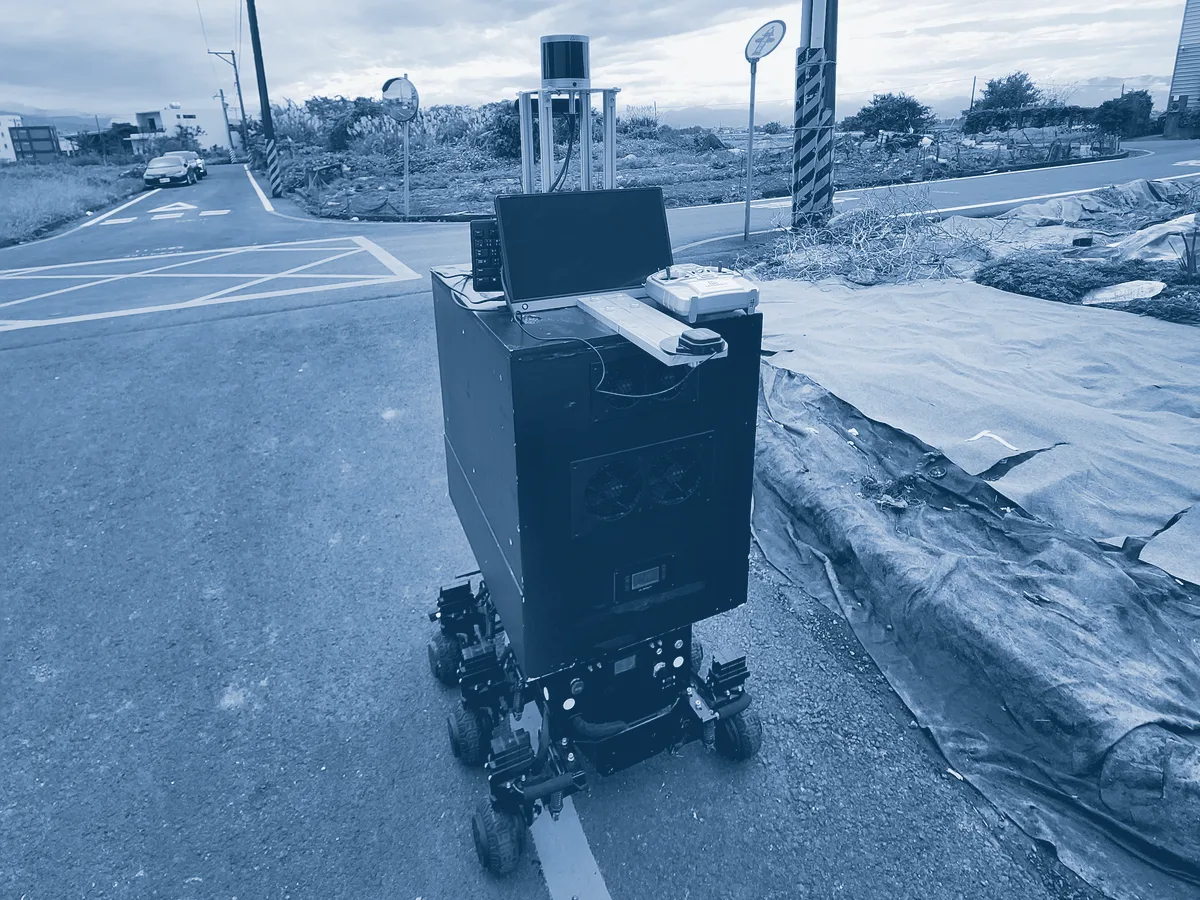
Ground & legged robots
The same navigation and mission layers, customized for wheels and legs.
Aerial
Drones that need to know where they are when GPS is jammed.
Who it’s for
For teams that cannot afford to lose their position
Built in Taiwan, for coastal waters everywhere.
- 01
USV builders
Teams building uncrewed boats that need navigation, simulation or an autopilot.
- 02
Survey & port operators
Keep working — and keep your data — when GPS is unreliable.
- 03
Dual-use & public safety
Navigation for waters where GPS is contested.
From the blog
State estimation, from first principles
Building a Factor Graph Engine From Scratch
Continuing my journey through the implementation of factor graph-based state estimation, we first explored how a classic Extended Kalman Filter (EKF) update is not a black-box matrix equation, but fundamentally a two-factor graph solve via Non-linear Least Squares (NLS). When we look under the hood
ReadFrom Offline to Online SLAM
Batch Factor Graphs unlocked fabulous offline SLAM to produce highly accurate maps. You collect data on a long robot run, feed it to the...
ReadGaussians and the Information Form: The Secret Sauce of Factor Graphs
When you first dive into State Estimation and Kalman Filters (whether Extended or Unscented), you learn that they belong to a broader family of Gaussian Filters. But soon enough, a close cousin is introduced: the Information Filter. This alternative view makes you realize that a Gaussian distributio
Read
Contact
Building a robot that cannot lose its position?
We work with USV builders, survey and port operators and dual-use integrators. Built in Taiwan, for coastal waters everywhere — if that sounds like your work, let’s talk.
Emailc.argueta@s1s2.ai